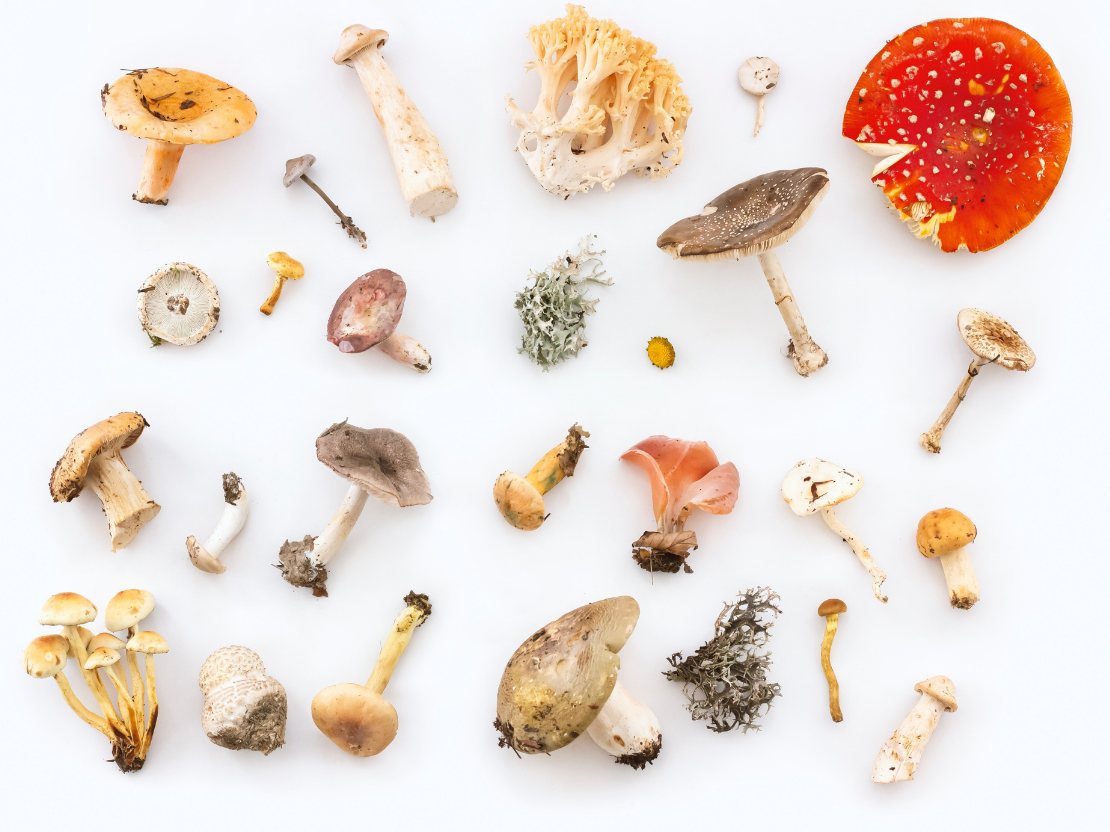
Ancient knowledge is often superseded by modern research. But sometimes studies can confirm what has long been known through tradition. In these cases, tradition and research complement each other perfectly. An example? – Medicinal mushrooms. Learn about their effects, uses, and everything else you need to know here.
Mushrooms are often underestimated. We usually only know their fruiting bodies as edible fungi. Button mushrooms, porcini, chanterelles, and the like are delicious and also score points with their nutritional content, but mushrooms are far more than that. The majority of them are hidden, almost invisible to us, underground. In total, fungi have a biomass of 12 gigatons of carbon. That's about 200 times more than all the people combined.
Whether edible, poisonous, or medicinal, mushrooms are neither plants nor animals, but rather their own biological kingdom. Like plants, mushrooms have cell walls and a fixed location, but they do not photosynthesize. Therefore, just like animals, they must obtain nutrients from their environment.
Fungi are a very diverse kingdom. There are single-celled organisms like yeasts and multicellular organisms like edible mushrooms or molds. Some fungi are parasites, others pests, and still others form symbiotic relationships with various living organisms. For example, almost every tree is connected underground to fungal hyphae, forming a vast network also known as the "wood wide web." Both the fungi and the trees benefit from this connection. The fungus receives essential nutrients, while the tree trains its defense system and receives clean water. Forest researcher Peter Wohlleben, arguably Germany's most famous forester, goes even further. He believes that trees can communicate via fungal threads and thus exchange information.
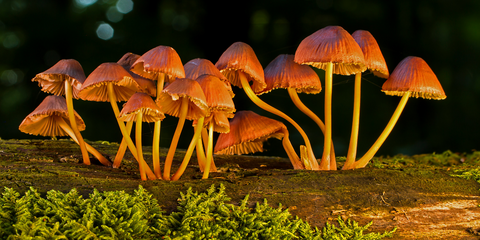
Fungi are also found in the human body. They are part of our gut flora. There are numerous studies and findings on gut bacteria. We now know that gut bacteria have a significant influence on the immune system. Research on gut fungi, however, is still in its early stages. So far, it can already be said that fungi play an important role in human health and disease.
There is no precise definition of the term "medicinal mushroom." It is generally understood to mean mushrooms that can support a healthy lifestyle thanks to their high content of valuable nutrients. Therefore, pathogens such as certain molds are excluded. In principle, all edible mushrooms and mushrooms that are not used in cooking due to their unpleasant taste, but are used as remedies in traditional medicine, can be considered medicinal mushrooms.
When medicinal mushrooms or extracts derived from them are used for disease prevention, as a complementary or sole therapy, this is called mycotherapy. The originator of this term, Jan Ivan Lelley, even advocated for mycotherapy to be recognized as an independent field within naturopathy.
People often associate the term "vital mushrooms" with something inappropriate. Many think of illegal substances, mold, or athlete's foot, which is completely wrong. Because "medicinal mushroom" and "medicinal mushroom" are used synonymously, some also associate them with pharmaceuticals. However, vital mushrooms are neither of these.
Medicinal mushrooms are not medicines and should therefore not be used as the sole treatment for illnesses. Furthermore, they are not approved for this purpose in Germany. In particular, people with cancer should not rely solely on mushrooms for treatment. However, in consultation with their doctor, they can be considered as an additional (complementary) method. Such consultation is important because interactions between the mushroom preparation—whether powder, capsule, or extract—and medication are possible.
Medicinal mushrooms should not be confused with "magic mushrooms." These have hallucinogenic effects and can trigger psychoses. These mushrooms are classified as narcotics and are illegal.
Mushrooms contain various nutrients and active ingredients that have diverse effects on the body. The exact composition and ingredients vary from species to species, but some substances are very common. These include:
In this country, we are mostly familiar with medicinal plants like chaste tree, valerian, or calendula from naturopathy. But this wasn't always the case. For example, Hildegard von Bingen wrote about the beneficial effects of mushrooms as early as the twelfth century. Over the years, however, this knowledge has been lost.
In other regions, this is not the case. Particularly in Asia, traditional knowledge has been preserved and expanded upon for many years. Medicinal mushrooms are an integral part of Traditional Chinese Medicine (TCM). Their imaginative names sometimes reveal their value. For example, Reishi is also known as the "mushroom of immortality." In TCM, medicinal mushrooms are generally used to strengthen the immune system. Depending on the specific product, other applications in traditional medicine are also possible.
All these possible effects are based on traditional knowledge and are not proven according to Western standards for the efficacy of medicines.
Consumer protection agencies and the Federal Office for Consumer Protection and Food Safety point out that most studies on medicinal mushrooms are based on cell cultures and laboratory animals (only a few on humans). While these studies provide indications of various effects, conclusive human studies are lacking. This is also why mushrooms are not permitted as medicinal products in Germany, but only as food supplements. This does not mean, however, that mushrooms have no health benefits or are even harmful, but simply that, to date, there is insufficient data for drug approval.
In other countries, the existing studies are sufficient for approval. Japan and the USA already permit therapy with medicinal mushrooms.
Medicinal mushrooms are generally very well tolerated. Side effects such as nausea are rare. Shiitake mushrooms are known to cause allergic reactions (so-called initial aggravations). This applies to both medicinal and culinary mushrooms.
The greatest danger with mushroom supplements, however, stems not from side effects, but from contamination. If the supplements are processed improperly, mold and other pollutants can be present in the products. Therefore, when buying medicinal mushrooms, you should ensure they are produced, tested, and certified in Germany or Europe. Strict controls are in place there to ensure your safety.
Furthermore, some medicinal mushrooms can interact with medications. This means that the medications may be less effective, have their effects intensified, or cause unwanted side effects. For example, beta-glucan extracts, when taken with anti-inflammatory drugs, could lead to an inflammatory reaction. This was observed in an animal study. Caution is also advised when using Cordyceps in conjunction with antibiotics, blood thinners, or diabetes medications.
Here's how to safely take mushroom products:
The diversity of fungi in nature is remarkable. Experts estimate that between 2.2 and 3.8 million species exist. Of these, only three to eight percent are known in detail. Several hundred of them could have a positive influence on health. Traditional Chinese medicine mentions around 20 different medicinal mushrooms. We'll show you some popular medicinal mushrooms and their potential effects.
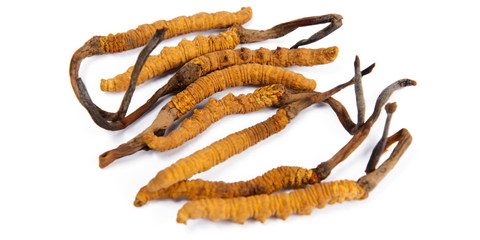
The Chinese caterpillar fungus Cordyceps is one of the best-known and most thoroughly researched medicinal mushrooms. In 1992, athletes at the Olympic Games used it to enhance their performance. Several studies have shown that this medicinal mushroom can improve oxygen uptake, which has a positive effect on endurance and physical performance. The mushroom is also attributed with other effects such as anti-inflammatory potential, increased ATP production, improved concentration, and more.
Learn everything you need to know about Cordyceps sinensis here.
This medicinal mushroom is also widely used in Traditional Chinese Medicine (TCM) and is employed there for nervous disorders, to increase general vitality, for lethargy, and for stomach ulcers. Scientific studies on this medicinal mushroom and the growth of nerve cells are particularly interesting. Hericenones and erinacines, which are found in the monkey head mushroom, have been shown to stimulate the production of nerve growth factors (NGF) in cell culture experiments.
Want to learn more about lion's mane? Then click here for the detailed article → Hericium: Effects & Uses of Lion's Mane
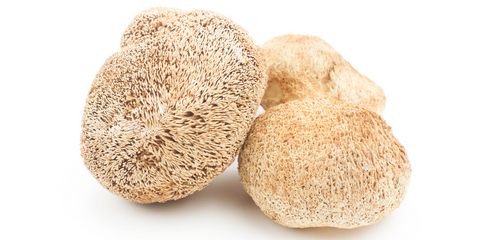
This mushroom originates from Brazil, but is now valued worldwide for its positive effects on the immune system. Agaricus arrived in Japan in the 1960s, where its scientific study began. Experiments on cells, and later on animals, demonstrated the activation of immune cells.
Recommended reading: Agaricus blazei murrill (ABM) - The almond mushroom and its effects
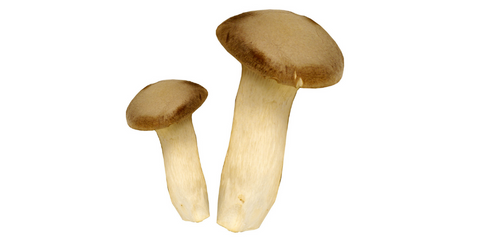
Shiitake mushrooms have long been used in China and Japan as both culinary and medicinal mushrooms. And you'll find them increasingly as a food product here as well. No wonder – shiitake are incredibly delicious and contain a number of healthy nutrients. Their beneficial effects on our health are being investigated in research. For example, it has been shown that the compound lentinan influences our natural killer cells. An increased production of these cells was even observed in a human study.
Learn more about the Shiitake medicinal mushroom here.
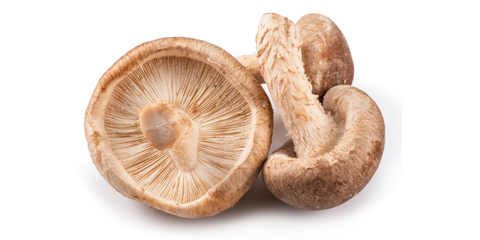
This mushroom is one of the few medicinal mushrooms that originate from Europe, more precisely from Finland. There, it grows on birch trees and is used to naturally strengthen the immune system. Researchers are also investigating its potential effects on the liver, intestines, blood sugar, cancer, endurance, and performance.
More information about Chaga can be found here → Chaga Mushroom
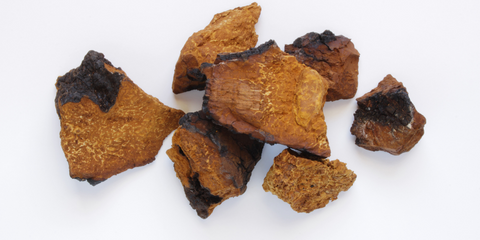
In China, this mushroom species is called Ling Zhi and is prized as the mushroom of immortality. For a long time, Reishi was only available to the imperial family due to its rarity. Today, it is easily cultivated and is one of the best-selling mushrooms in dietary supplements. Ganoderma lucidum is also the subject of current research, which is investigating its effects on the immune system, diabetes, the liver, and its antioxidant properties.
More information about Reishi can be found here → Reishi Mushroom
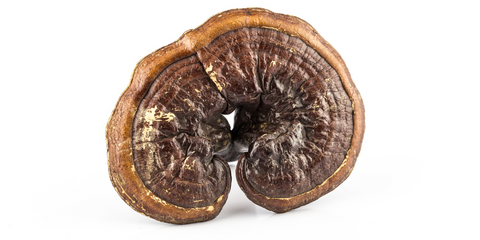
The turkey tail mushroom (Coriolus versicolor) grows in both Europe and Asia. Since it is not considered edible and therefore not classified as a foodstuff, it is listed as a novel food in the EU Novel Food Catalogue and requires authorization. If you find online shops offering turkey tail mushrooms as a dietary supplement, you should avoid them. Selling them is illegal.
In Asia, the maitake mushroom is a popular edible mushroom. It is also used as a traditional remedy to strengthen the immune system. In China, it is even approved as a treatment for cancer. However, it is not approved for this purpose in Germany and should not be used for this purpose, as there is a lack of conclusive studies to support this assessment.
More information about Maitake mushrooms can be found here → Maitake Mushroom
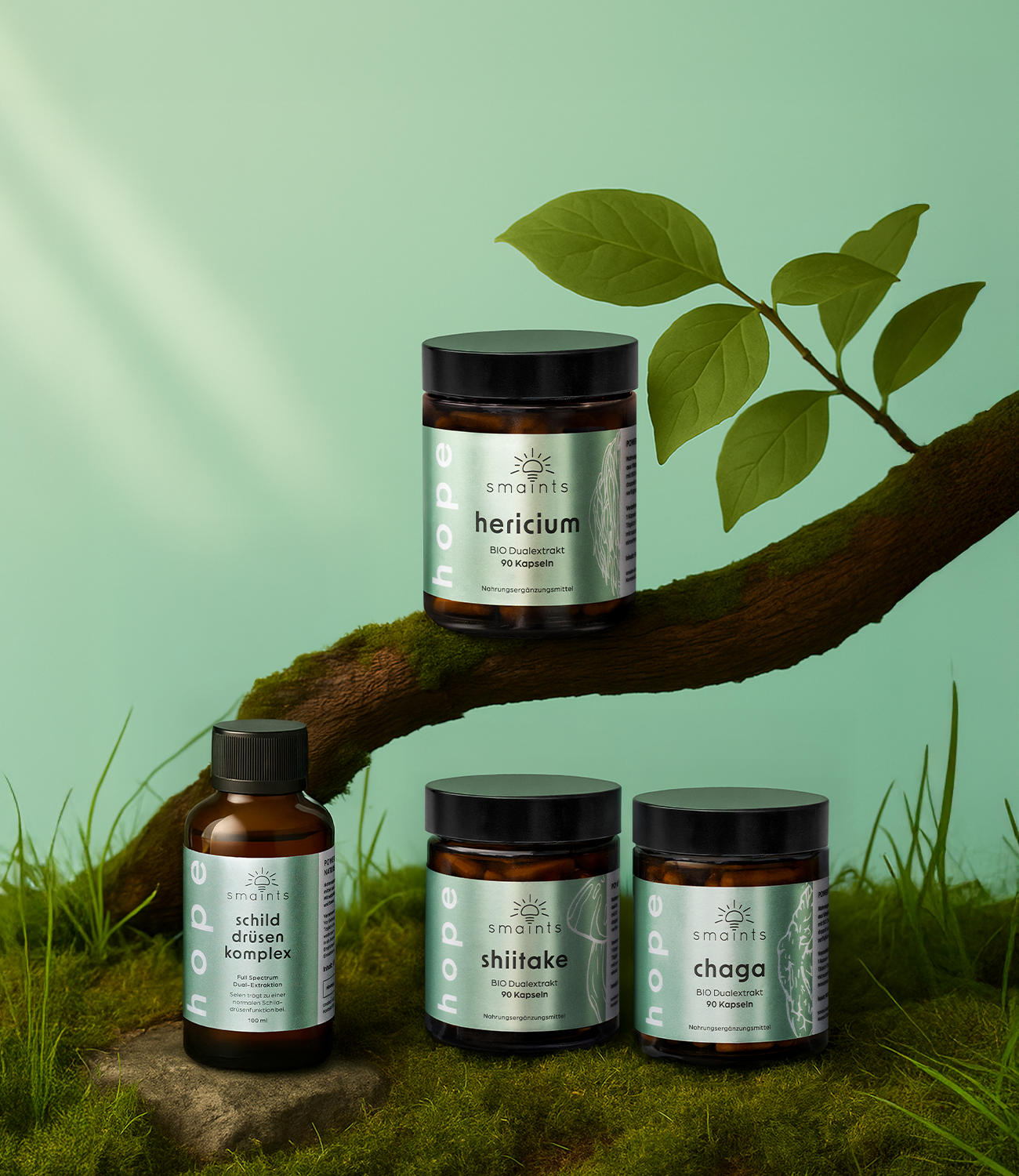
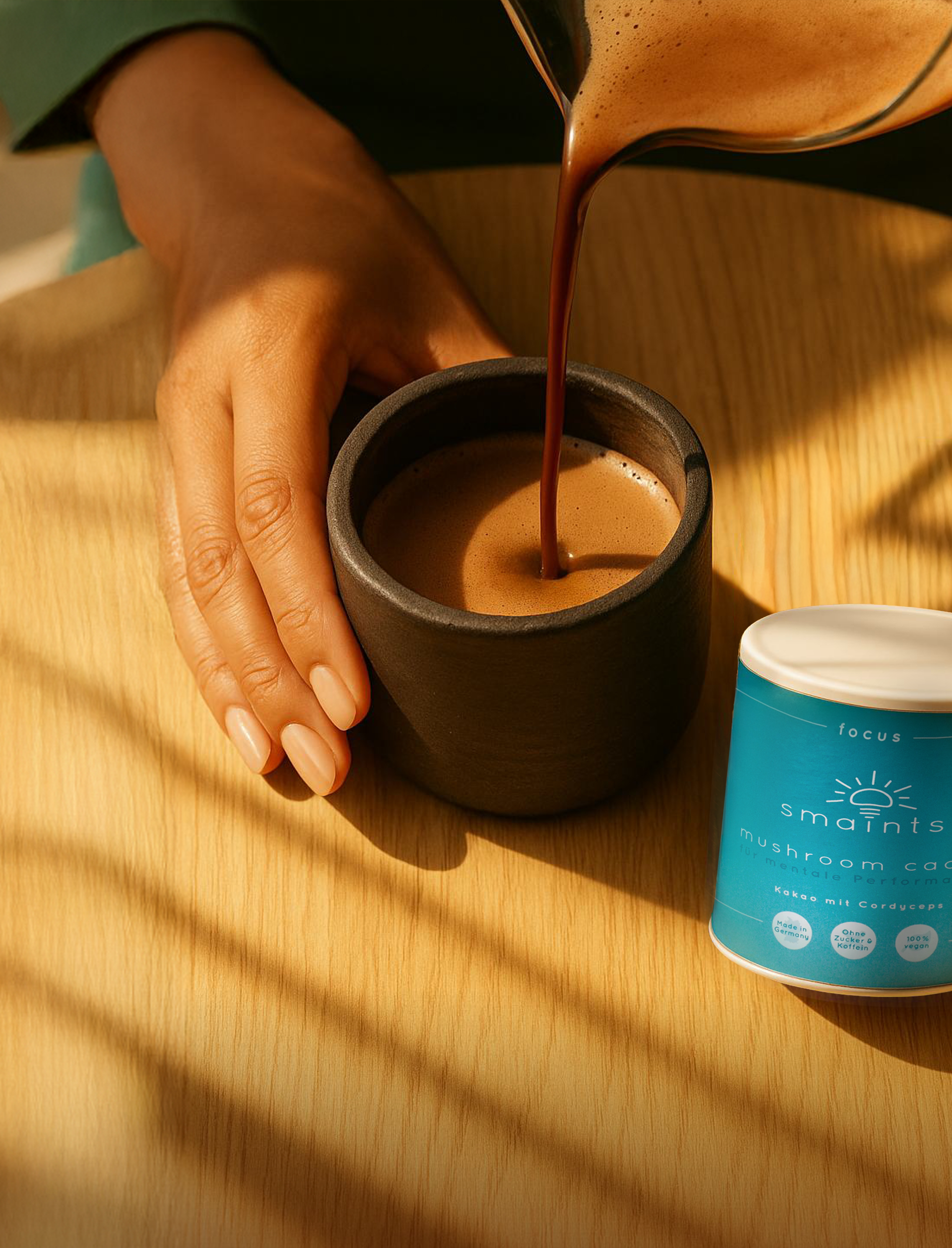
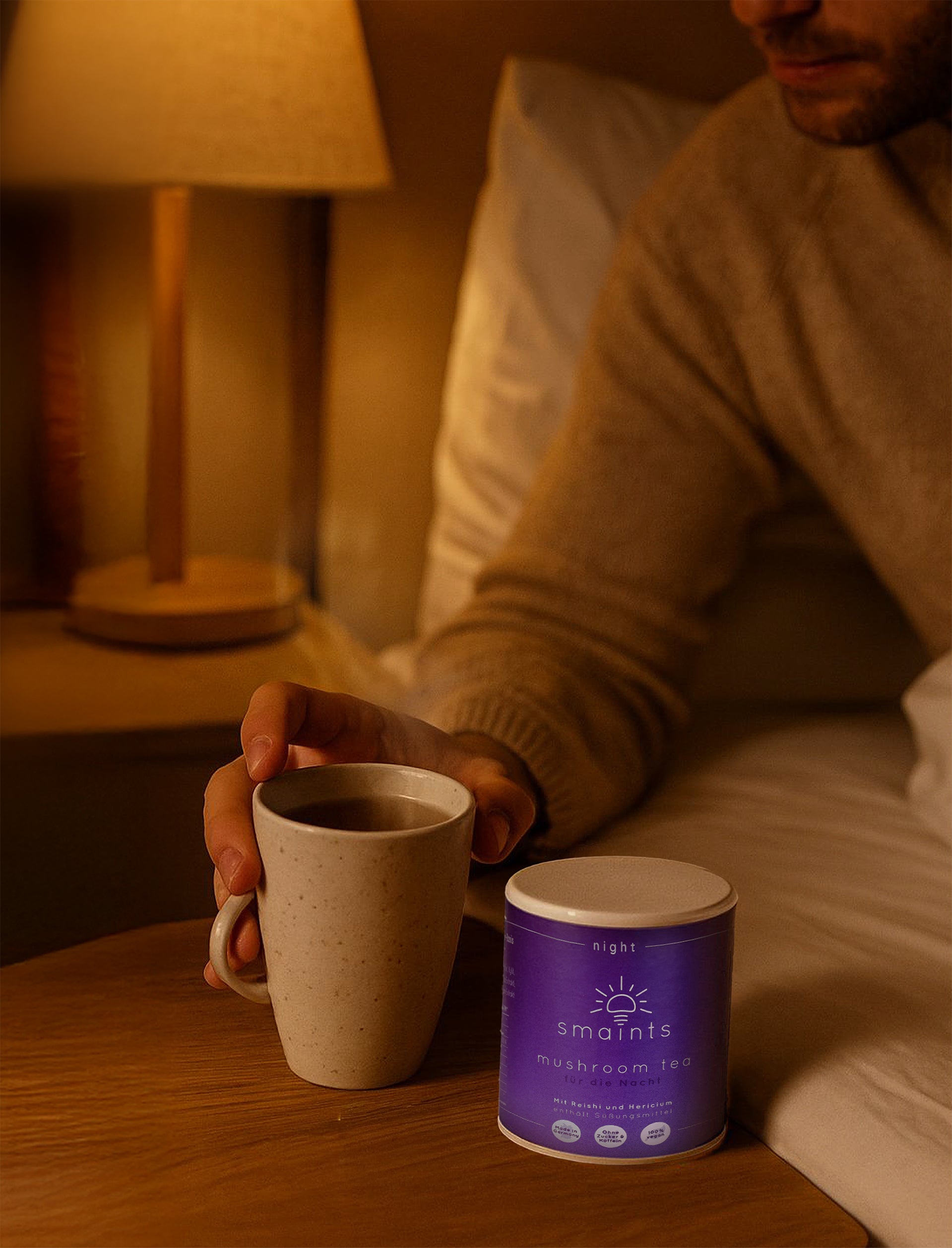
The modern world is fast-paced, demanding, and stressful. Who isn't looking for a natural solution to be more productive, stress-resistant, and healthier? We felt the same way. Through the biohacking scene, we eventually discovered the immense potential of medicinal mushrooms. We researched, tested, tried, and analyzed. We were quickly impressed by the ingredients and effects of medicinal mushrooms, but less so by the products on the market. With capsules and powders, the origin is often questionable, and the quality uncertain. All in all, it's not really practical for everyday life. We're convinced: There has to be a better way! Learn more about our startup here.
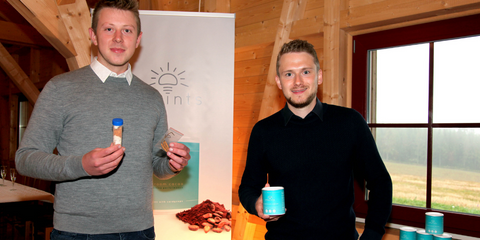
"Smaints" means "small saints," the name the Aztecs gave to mushrooms because of their health benefits. But nowadays, "smaints" stands for much more:
The Aztecs weren't the only ones to recognize the benefits of medicinal mushrooms. They are also traditionally valued in Traditional Chinese Medicine (TCM), South America, and Nordic countries. We want to bring this positive image of medicinal mushrooms back into our society.
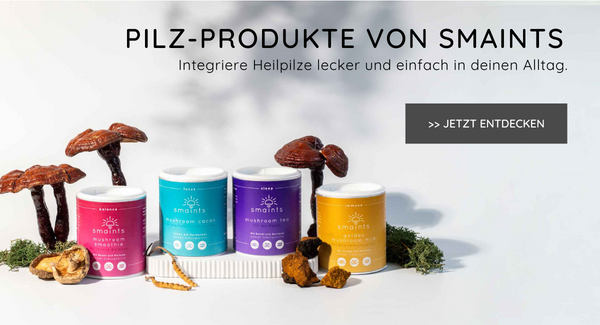
Learn more about our medicinal mushroom products for your everyday life!
Sources:
https://www.researchgate.net/publication/325276009_The_biomass_distribution_on_Earth
https://www.swr3.de/aktuell/birke-buche-internet--das-wood-wide-web-100.html
https://www.welt.de/wissenschaft/article13402584/Warum-Pilze-weder-Pflanzen-noch-Tiere-sind.html
https://www.ncbi.nlm.nih.gov/pmc/articles/PMC4448585/
https://www.ncbi.nlm.nih.gov/pmc/articles/PMC6213178/
https://pubmed.ncbi.nlm.nih.gov/22324407/
https://pubmed.ncbi.nlm.nih.gov/25746617/ https://www.bvl.bund.de/SharedDocs/Downloads/01_Lebensmittel/expertenkommission/Erste_Stellungnahme_Vitalpilze.pdf?__blob=publicationFile&v=3
https://www.bgbm.org/en/node/3952
https://www.ncbi.nlm.nih.gov/pmc/articles/PMC7356751/
https://www.tandfonline.com/doi/full/10.1080/21501201003735556
https://pubmed.ncbi.nlm.nih.gov/18782264/
https://pubmed.ncbi.nlm.nih.gov/31930148/
https://pubmed.ncbi.nlm.nih.gov/25866155/
https://www.ncbi.nlm.nih.gov/books/NBK92757/
https://pubmed.ncbi.nlm.nih.gov/29723488/
https://www.spektrum.de/lexikon/biologie-kompakt/pilze/9069


Bio-Vitalpilz-Extrakte
aus Europa

Wissenschaftlich entwickelt - Tradition trifft Moderne

Alltagstauglich & lecker

Unabhängig laborgeprüft
in Deutschland