
Want to boost your mood at the push of a button? The neurotransmitter serotonin makes it possible. Learn everything you need to know about the effects, function, and importance of serotonin here.
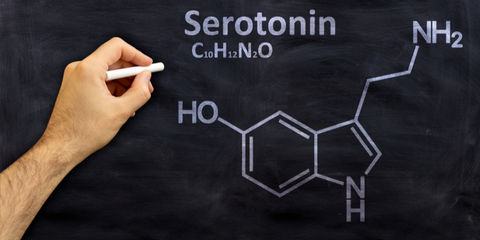
Serotonin is a molecule found in humans and almost all other animals, as well as plants. It acts as a hormone, neurotransmitter, and messenger substance in our bodies. The chemical name for serotonin is 5-hydroxytryptamine (5-HT).
It was formerly also called enteramine, but at that time it wasn't known that serotonin and enteramine are the same substance. It wasn't until 1952 that it was proven that they are the same molecule. Scientists discovered early on that serotonin is found in various tissues. For example, it is present in the brain, lungs, kidneys, blood platelets, and the gastrointestinal tract. You can either absorb serotonin directly or the body can synthesize it from its building blocks. However, the neurotransmitter cannot cross the blood-brain barrier, so the body's own production plays a crucial role in brain function.
The hormone is primarily produced in the intestinal mucosa. Since it cannot cross the blood-brain barrier, production in the central nervous system is also possible. The precursor for serotonin production is tryptophan. This is an essential amino acid, meaning it's a building block of proteins that the body cannot produce itself. This immediately clarifies the connection between serotonin and nutrition, because without sufficient tryptophan intake, serotonin cannot be produced. Tryptophan is converted into the neurotransmitter in two steps. In the first step, tryptophan is hydroxylated to 5-hydroxytryptophan (5-HTP) through the activation of vitamin D.
You might be familiar with 5-HTP, as it's sold as a dietary supplement for rapid serotonin production and restful sleep. The second step involves decarboxylation, which requires vitamin B6 as a cofactor. If all of this sounds a bit too technical, don't worry. The key takeaway is simple: sufficient tryptophan must be consumed for serotonin production. Tryptophan is a component of your diet and is found in several foods.
Since serotonin is found in many different tissues, it's reasonable to assume that it performs various functions in the body. And that's indeed the case. Its function in the central nervous system is quite different from that in the rest of the body (the periphery), which is why it makes sense to divide it into these two areas. There are at least 15 different receptors to which serotonin can bind. This allows the body to react to different serotonin concentrations and initiate processes appropriate to the situation. This also explains the sometimes contradictory functions of serotonin in the organism.
Serotonin is often referred to as the happiness hormone. However, its functions in the brain are far more diverse. As already mentioned, it cannot cross the blood-brain barrier but must be produced locally. Tryptophan from food is necessary for this, as it can enter the brain via transporters.
Researchers have found that low tryptophan and serotonin levels are common in depression, and this is precisely what lowers mood. Serotonin promotes a feeling of calmness and reduces anxiety and aggression. Besides serotonin, dopamine, oxytocin, and endorphins are also known as "happiness hormones." Therefore, serotonin alone is not responsible for a good mood. All of these neurotransmitters need to be in balance for you to feel content and in a positive mood.
A good night's sleep is often a prerequisite for a good mood. Serotonin plays several roles in the sleep-wake cycle.

The amount of serotonin in the brain is indirectly related to our diet. When protein or tryptophan is consumed along with carbohydrates, the tryptophan concentration in the brain increases, allowing serotonin to be produced there. This means that sufficient serotonin in the brain has an appetite-suppressing effect.
This neurotransmitter is an antagonist to dopamine in relation to sexual behavior. It is released in the brain during ejaculation and has an inhibitory effect on male sexual behavior. Serotonin also plays a role in regulating body temperature, raising or lowering it depending on the situation. Serotonin can also have a bidirectional effect on pain, either amplifying or diminishing the pain stimulus.
Besides its numerous effects on the brain, serotonin also influences the cardiovascular system, blood clotting, and the gastrointestinal tract. The latter is of particular interest to scientists due to research on the gut microbiota and the gut-brain axis.
The effects on the cardiovascular system are complex. Depending on the tissue, serotonin leads to either dilation or constriction of blood vessels. In the kidneys and lungs, it causes vasoconstriction, while in the muscles, it causes dilation. Furthermore, blood pressure is indirectly influenced by this neurotransmitter.
Platelets are necessary for blood clotting. However, they also serve as storage for serotonin and themselves possess receptors that respond to this neurotransmitter. Serotonin enhances blood clotting and contributes to wound healing.
Our intestines are constantly in motion. This is called peristalsis and ensures that the food pulp is continuously moved downwards. Serotonin release is mediated by high internal pressure, such as after a large meal. In addition to this motor function, serotonin also has a sensory function. High concentrations can lead to nausea and vomiting. This is, for example, the reason for vomiting as a side effect of chemotherapy, as increased serotonin is released in the intestines during this time. Furthermore, signals from the gut are transmitted. Some studies suggest that changes in gut bacteria can alter the effects of serotonin, and vice versa. For example, it has been shown that serotonin can reduce the number of pathogenic bacteria in the gut.
The many functions of the happiness hormone serotonin make it clear how detrimental a serotonin deficiency can be for the body. To avoid this, it's helpful to understand the causes, as you can directly influence some of them.

Many people immediately think of depression when they hear about a serotonin deficiency. However, when this neurotransmitter is lacking, other symptoms are also possible. The following symptoms have also been reported in cases of serotonin deficiency:
Furthermore, low serotonin levels appear to play a role in the development of some diseases. This is suspected, for example, in irritable bowel syndrome and migraines. The connection between serotonin and melatonin also explains why a serotonin deficiency can be responsible for sleep problems. Without serotonin, the sleep hormone melatonin cannot be produced, making it difficult to fall asleep and stay asleep.
A balanced hormone level is crucial for your health, and this is also true for serotonin. Both a deficiency and an excess of this hormone can cause health problems. The good news is that an excess doesn't just happen; it's only triggered under specific conditions.
If serotonin levels are significantly elevated, the so-called serotonin syndrome can develop. This is more of a combination of various symptoms than a classic illness. The serotonin excess is triggered by certain medications and must be treated quickly, as it can even be fatal. These medications are typically prescribed for depression, precisely when a serotonin deficiency is actually present. These antidepressants either increase the release of the neurotransmitter or inhibit its breakdown. The syndrome can occur either after the first dose of an antidepressant or after the dosage has been increased.
Significant excesses most often occur when interactions arise between different medications or drugs. Therefore, even natural substances like St. John's wort or tryptophan should not be combined with antidepressants without consulting a doctor. The same applies to some painkillers, migraine medications, the antibiotic linezolid, and drugs such as amphetamines, cocaine, and ecstasy.
Since serotonin acts in both the brain and the rest of the body, the possible symptoms of a dangerously elevated serotonin level are also diverse. Initially, the syndrome can feel similar to a flu-like infection. However, more serious symptoms can develop within minutes. These include, for example, fever with chills, an increased pulse and blood pressure, an increased respiratory rate, profuse sweating, nausea, vomiting, and diarrhea, as well as headaches.
Since the interplay between muscles and nerves can also be impaired, so-called neuromuscular symptoms such as tremors, exaggerated reflexes, muscle cramps, and muscle twitches are possible. Serotonin syndrome also triggers symptoms in the brain. These include restlessness, hallucinations, and disturbances of consciousness and coordination.
The syndrome becomes seriously life-threatening when cardiac arrhythmias, irregular heartbeats, and epileptic seizures occur. Since serotonin also promotes blood clotting, blood clots can form in the organs, leading to organ dysfunction.
If you are taking antidepressants and notice symptoms of serotonin syndrome, you should seek medical attention immediately. Serotonin syndrome is dangerous and should not be taken lightly.
For most of us, however, the problem isn't an excess of serotonin, but a deficiency. Therefore, many people want to increase their serotonin levels, preferably naturally. In principle, this is possible, but if you have signs of serious depression, you need medical advice and shouldn't try various methods on your own.

Foods containing serotonin, or products that already contain serotonin, are only partially effective in increasing serotonin levels, because this neurotransmitter cannot cross the blood-brain barrier. Therefore, they won't directly improve your mood. However, you can still prevent a serotonin deficiency with certain foods. We'll show you our top picks for balanced serotonin levels:
Serotonin is a neurotransmitter that performs many different functions in the body. Its best-known function is mood regulation, which is why serotonin is also called the "happiness hormone." It is therefore not surprising that serotonin levels in the body can be reduced in cases of depression.
The causes of a serotonin deficiency are varied. However, poor nutrient intake and insufficient sunlight are possible contributing factors. A serotonin deficiency can manifest in various symptoms, including anxiety, headaches, and more. However, too much serotonin can also be harmful. Antidepressants or a combination of different medications can cause serotonin levels to rise too high. This is dangerous and requires medical attention.
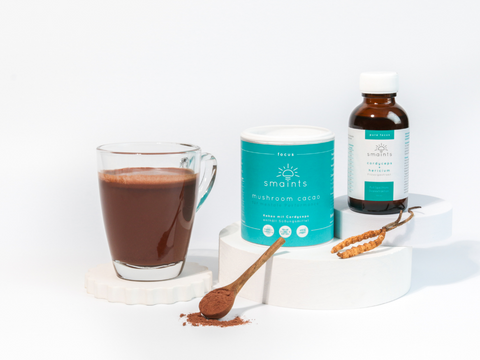
However, a deficiency is possible for significantly more people. You can counteract a serotonin deficiency through a healthy diet, exercise, sun exposure, and a smart combination of carbohydrates and tryptophan. Unfortunately, direct serotonin from food cannot cross the blood-brain barrier, so the neurotransmitter must always be produced directly in the brain. The amino acid tryptophan, vitamin D, and vitamin B6 are necessary for this. Ideal foods for the body's own serotonin production include cocoa, medicinal mushrooms (ideally combined as mushroom cacao ), nuts, and more. They are real mood boosters :-)
Sources:
https://pubmed.ncbi.nlm.nih.gov/18471139/
https://pubmed.ncbi.nlm.nih.gov/31345143/
https://pubmed.ncbi.nlm.nih.gov/29804531/ https://www.sciencedirect.com/science/article/abs/pii/S1087079209000999?via%3Dihub
https://pubmed.ncbi.nlm.nih.gov/8697046/ https://journals.lww.com/dcrjournal/Abstract/2007/50030/Serotonin_and_Its_Role_in_Colonic_Function_and_in.13.aspx
https://www.mdr.de/wissen/darm-serotonin-bakterien100.html
https://pubmed.ncbi.nlm.nih.gov/27824534/
https://www.netdoktor.de/krankheiten/serotonin-syndrom/
https://pubmed.ncbi.nlm.nih.gov/30236533/


Organic functional mushrooms
from Europe

Scientifically developed - tradition meets modernity

Suitable for everyday use & delicious

Independently laboratory tested
in Germany