

Stress is a daily companion for most of us. However, it can lead to illness in the long run. Greater well-being and balance are protective factors. But how do you achieve them? Learn here how the adaptogenic effects of medicinal mushrooms can help you.
Adaptogenic medicinal plants and medicinal mushrooms are currently enjoying renewed popularity, although their benefits have been known in traditional medicine for centuries. Whether for stress, mild depression, general malaise, or immune modulation, many of these areas are currently being researched in connection with adaptogens. We'll show you the current state of research as well as traditional applications of adaptogenic plants and medicinal mushrooms.

Some living beings can perfectly adapt to the prevailing conditions of nature. They possess a remarkable capacity for rapid adaptation. Natural remedies that can transfer this natural effect to humans are called adaptogens. However, this ability alone is not sufficient to meet the definition of an adaptogen. Originally, they were defined as substances that increase resistance to a broad spectrum of harmful factors (stressors) of various physical, chemical, and biological origins. Adaptogens are considered metabolic regulators with the ability to adapt the body to environmental factors and prevent resulting damage. Furthermore, adaptogens are believed to be safe and non-toxic. Unlike medications, they do not act in a specific way.
Simply put, adaptogens are an ideal support for your body. However, they should never be used as a sole treatment. The active ingredients from plants and medicinal mushrooms, for example, cannot shorten your 80-hour work week and thus combat the root cause of stress. They merely provide support during such phases of life through their regulatory properties.
For a long time, fungi were classified as plants. But today we know that they form their own kingdom, separate from both animals and plants. While fungi are sessile like plants, their biology is closer to that of animals. Nevertheless, or perhaps even precisely because of this, medicinal mushrooms also have an adaptogenic effect. They can therefore influence stress regulation and your overall well-being, just like some medicinal plants.
Mushrooms are not only used in Traditional Chinese Medicine (TCM) and Ayurveda, but they are also an integral part of modern medicine. For example, in the 20th century, the first antibiotic, penicillin, was extracted from mushrooms. Its discoverer, Alexander Fleming, thus ushered in a new era in the treatment of bacterial diseases. Furthermore, medicinal mushrooms, with their adaptogenic effects, should not be confused with psychoactive mushrooms, better known as magic mushrooms. These mushrooms induce altered states of consciousness and can be harmful to health. Therefore, they are, strictly speaking, the exact opposite of medicinal mushrooms, which are intended to promote health.
There are a multitude of different adaptogenic medicinal plants and mushrooms. It's easy to lose track or not even know which adaptogen is ideal for individual needs. To help you keep track, we've listed the most popular adaptogens and their respective characteristics.
Although many different adaptogens exist with varying active ingredients, a large part of their effects, but especially their influence on stress, is thought to be mediated by the HPA axis (hypothalamic-pituitary-adrenal axis). This axis is a complex regulatory circuit in the body that determines the stress response. All three tissues involved are hormone-producing glands. The hypothalamus is part of the diencephalon (the middle brain). The pituitary gland is part of the central nervous system, and the adrenal cortex produces the stress hormone cortisol in response to signals from the other two. This ultimately affects the body's cells. In addition, the HPA axis also influences digestion, the immune system, metabolism, mood, emotions, and sexuality. Adaptogens regulate the key mediators of the stress response. To do this, they mimic stress effects and upregulate heat shock protein 70 (HSP70). This protein acts as a stress sensor and thus influences the regulatory circuit, reducing the amount of cortisol and nitric oxide in the blood. As a result, ATP production (energy supply to the cells) increases. This in turn improves mental and physical performance.
The adaptogenic effect of some medicinal mushrooms is also immunomodulatory. This means they can either stimulate or suppress the immune system, depending on the circumstances. Both can be beneficial for the body. In the case of allergies, for example, suppressing the immune system is helpful because the body is overreacting. Chronic stress significantly reduces the number of immune cells in the blood, resulting in a weakened defense against pathogens. Upregulating the immune system, however, allows bacteria and viruses to be fought off despite stress.
Like other plant-based foods, adaptogens also contain phytochemicals, vitamins, and minerals that can have beneficial effects on health. Some of them contain antioxidants, which protect cells from free radicals. These substances, also known as free radical scavengers, prevent damage, for example, to DNA. This is one of many factors in cancer prevention.
Are you convinced by the positive effects of adaptogens, but still have questions? Our FAQ provides the answers to all your questions.
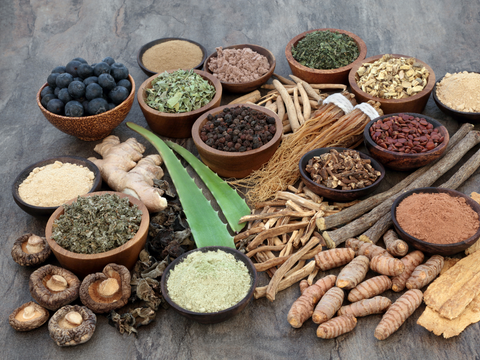
Medicinal plants and mushrooms have been used and proven effective in many parts of the world for a long time. In this country, their benefits are becoming increasingly well-known and popular. Some of them have an adaptogenic effect on the body. This means they promote your ability to adapt and are a great boost to your well-being. Examples of adaptogens include ashwagandha, cordyceps, hericium, chaga, reishi, rhodiola, ginseng, and rose root.
Use supportive medicinal plants and vital mushrooms! There are many areas of application; the most promising are:
The adaptogenic effects of medicinal mushrooms and plants are no longer solely the domain of naturopathy. Numerous scientific studies now confirm individual effects and explain the efficacy of medicinal mushrooms. For example, a regulatory effect on the HPA axis has been demonstrated. This is a feedback loop that primarily governs the body's stress response. Furthermore, other effects on the immune system and individual components such as antioxidants are also known.
Adaptogens are available in various forms. For optimal effects from medicinal mushrooms, we recommend liquid extracts rather than capsules, as the active ingredient concentration is higher in liquids. When purchasing, pay attention to quality. This ensures optimal benefits without the health risks posed by unwanted additives. Other criteria, such as suitability for a vegan diet or the combination of adaptogens, can also influence your decision.
Why not visit our smaints shop and be inspired by our high-quality "small saints"? – Our motto: Power through nature!

Sources:
Brekhman II (1980) Man and biologically active substance: the effect of drugs, diet and pollution on health. Pergamon Press, Oxford
https://pubmed.ncbi.nlm.nih.gov/28640972/
https://examine.com/supplements/ashwagandha/
https://examine.com/supplements/chaga/
https://pubmed.ncbi.nlm.nih.gov/27408987/
https://pubmed.ncbi.nlm.nih.gov/32545666/
https://examine.com/supplements/ganoderma-lucidum/
https://pubmed.ncbi.nlm.nih.gov/11081987/
https://www.bfr.bund.de/cm/343/risikobewertung_macahaltiger_nahrungsergaenzungsmittel.pdf
https://examine.com/supplements/maca/
https://examine.com/supplements/panax-ginseng/
https://pubmed.ncbi.nlm.nih.gov/19500070/


Organic functional mushrooms
from Europe

Scientifically developed - tradition meets modernity

Suitable for everyday use & delicious

Independently laboratory tested
in Germany