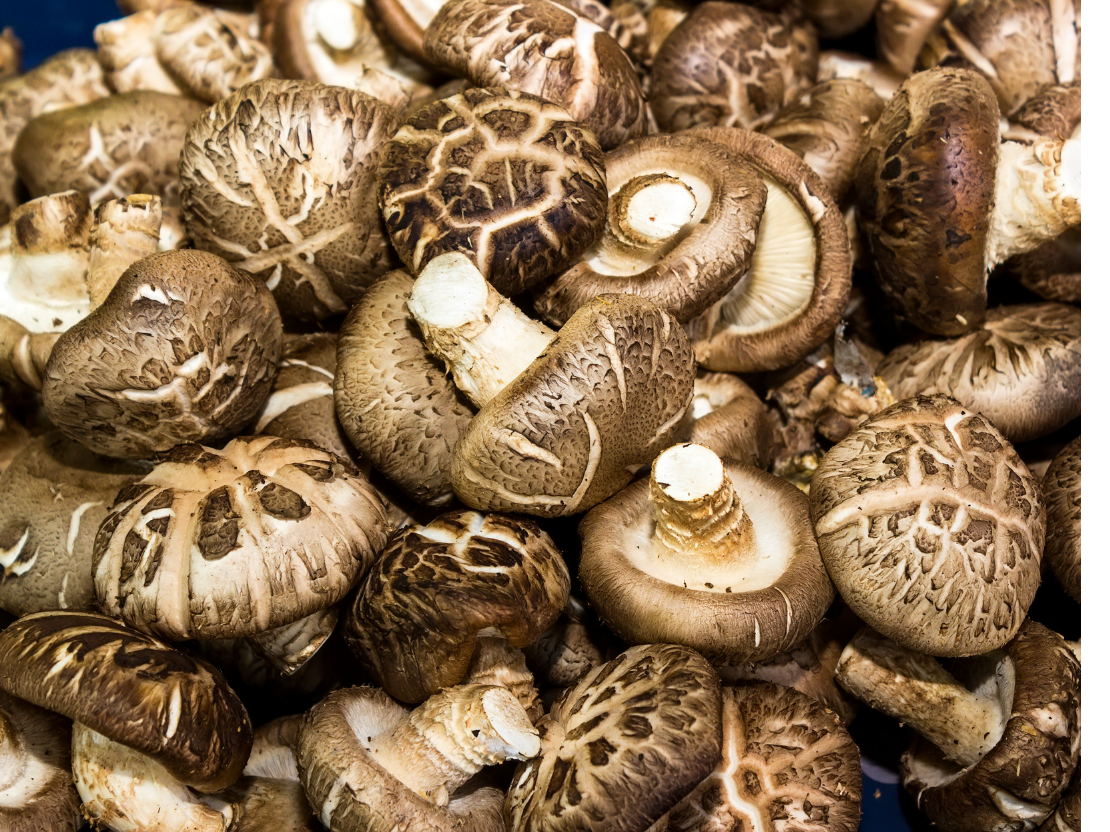
Do you love shiitake mushrooms in Asian dishes? But did you know that the shiitake mushroom is also used in traditional Chinese medicine? We'll show you the beneficial ingredients in the mushroom and everything you should know about the effects of shiitake!
The shiitake mushroom (Lentinula edodes) is also known as the king of mushrooms. But do they truly live up to this title? Decide for yourself: These medicinal mushrooms originally come from Asia. Their name is composed of two Japanese words. "Shii" refers to the pasania tree on which they naturally grow, and "take" means mushroom. Shiitake mushrooms have been known in Japan and China for over 2,000 years and are valued in cooking and as a patio heater. They are also enjoying increasing popularity in other parts of the world. Since they don't grow in our forests, they are cultivated and therefore available year-round. On the one hand, they have a delicious flavor, sometimes compared to a subtle garlic aroma, and firm flesh. On the other hand, they contain numerous valuable nutrients that make shiitake mushrooms particularly healthy.
The vitamins and minerals they contain alone offer health benefits. For example, the combination of calcium and vitamin D provides excellent bone protection. The B vitamins and essential amino acids make shiitake mushrooms an ideal food for vegetarians.

Medicinal mushrooms have many applications in traditional medicine. These effects of shiitake mushrooms are based on years of experience, but are not always fully scientifically proven. Therefore, if you have a serious illness, you should only use the medicinal properties of these mushrooms in addition to your regular treatment after consulting your doctor. These are the traditionally used effects of shiitake mushrooms:
In our modern world, we no longer have to rely solely on anecdotal evidence of healing effects. Scientific studies can examine the potential effects of shiitake mushrooms. And indeed, some of their applications have been confirmed. However, all the effects of shiitake mushrooms shown so far have only been observed in cells, in animal experiments, or in small human studies. Therefore, further studies are needed in each area to establish its therapeutic potential in medicine. Nevertheless, initial trends are already emerging.
Several studies have demonstrated an immune-boosting effect of shiitake extracts. Various constituents, such as lentinan, are believed to influence immune cells, including natural killer cells. This is thought to improve the body's defense against disease. In one study, healthy adults consumed dried shiitake mushrooms over a four-week period. Analysis of blood, saliva, and serum revealed several changes: the production of T cells and natural killer cells increased. Furthermore, the cells showed an improved ability to form activation receptors, thus enabling them to respond more effectively to pathogens. There was also evidence of enhanced intestinal immunity and reduced inflammation levels. Overall, it can already be said that certain substances in shiitake mushrooms can have immunomodulatory effects and are therefore of interest for promoting general health.
Since the immune system is weakened in HIV, research groups have investigated the effects of shiitake mushrooms in HIV-positive patients and in cell culture experiments. It is suspected that the polysaccharide lentinan could have positive effects in treatment. Because the HIV virus attacks so-called CD4-positive cells (special immune cells), increasing the number of these cells is important. In combination with a proven HIV medication and shiitake mushrooms, this effect was achieved to a greater extent than with the medication alone.
Further studies have observed a targeted effect of shiitake mushrooms on dental health. Caries-causing bacteria were reduced in the oral cavity after the administration of shiitake. Thus, the mushrooms also exhibit an antibacterial effect. Furthermore, the mushrooms may have an effect on the gut by influencing intestinal bacteria. It is suspected that fiber from the mushrooms serves as food for the intestinal flora and can thus strengthen the gut's defenses. This effect of shiitake has so far only been observed in animal studies.

Medicinal mushrooms contain triterpenes. These compounds can be beneficial for allergies. In an allergic reaction, the immune system overreacts and releases increased amounts of histamine. This substance activates mast cells (specialized white blood cells), which trigger reactions such as itching or skin redness. Triterpenes are believed to reduce histamine release and thus lessen the severity of an allergic reaction.
Elevated cholesterol levels are widespread due to our Western lifestyle. However, they pose a significant health risk, as high cholesterol in the blood can lead to cardiovascular diseases, such as stroke. Fiber from the medicinal mushroom shiitake may be effective in lowering these levels. In a study on mice, it increased cholesterol excretion, thus reducing blood cholesterol levels. This effect has also been demonstrated in humans after a daily intake of 90 grams of fresh or 9 grams of dried shiitake mushrooms. Therefore, the effects of these medicinal mushrooms may also contribute to the prevention of cardiovascular diseases.
Shiitake mushrooms also contain adenosine. This substance is known to dilate blood vessels and improve blood flow to the heart. This also protects the heart and blood vessels.
Before we analyze various studies in more detail, it's important to mention that cancer is a serious disease. The German Cancer Research Center (DKFZ) points out the following: "While there are studies on cell lines and animals that suggest an effect of the mushroom's components against cancer cells, and initial studies on a very small number of cancer patients have shown a positive effect on quality of life and indications of life extension in certain types of tumors, such as stomach or colon cancer, the significance of these studies is limited." Therefore, you won't be able to defeat the disease with shiitake powder, shiitake capsules, and similar products alone. However, you can use the mushroom's healing properties as a complementary treatment after consulting your doctor.
In China and Japan, lentinan, a component of shiitake mushrooms, has long been approved for cancer therapy. Therefore, a review study was able to analyze its effects on various types of cancer. The mushroom component was most frequently used for lung, stomach, and colorectal cancer. Overall, an improved quality of life was observed in patients. Furthermore, the effectiveness of chemotherapy and radiation therapy appears to be enhanced. Another study using a cell line demonstrated that treatment with lentinan halted the growth of breast cancer cells. The antitumor properties of shiitake mushrooms can likely be explained by their immunomodulatory effects. Further scientific investigations are needed to study these promising results in order to enable future therapies based on medicinal mushrooms.
Viewing the effects of medicinal mushrooms through a "Western lens" has several drawbacks. Studies can only ever test and measure individual parameters, never how a medicinal mushroom works as a whole. In Traditional Chinese Medicine, medicinal mushrooms are always considered holistically – that is, their effects on our body and its systems.
What Western studies perceive as partially negative is part of a larger detoxification and healing process. The shiitake mushroom's remarkable antibacterial and antiviral properties can, in some cases, trigger skin reactions – our largest detoxification organ.
The very compound lentinan, responsible for many of shiitake's beneficial effects, also appears to be capable of causing reactions. The so-called "shiitake dermatitis" occasionally causes skin rashes after consumption. In very rare cases, respiratory problems have also been observed as a more severe reaction. It is suspected that UVA light intensifies the skin reaction, as the rash appears particularly on sun-exposed areas of the body. Unfortunately, heating the mushrooms does not seem to prevent the reaction. In one study, some participants were unable to complete the trial due to a reaction to the mushrooms. In addition to "shiitake dermatitis," a few participants reported gastrointestinal issues, and a hypersensitivity reaction was observed, indicated by elevated eosinophil counts (a specific type of blood cell).
Furthermore, it is known that the spores of medicinal mushrooms can cause hypersensitivity reactions. This has been observed in workers in shiitake mushroom production. Interactions with medications are also possible. In an animal study, injected lentinan enhanced the effect of mendicants, which cause vasodilation, resulting in hemorrhages. However, this effect is not known to occur with oral ingestion in humans.
Since shiitake is both an edible and a medicinal mushroom, you can buy it in many different forms.
If you also want to use shiitake mushrooms for their medicinal properties, then the straightforward use of dietary supplements is recommended. When purchasing, look for a trustworthy manufacturer and ensure production takes place in Europe. Mushrooms act like natural filters and can absorb and store certain toxins. Therefore, laboratory-tested quality and careful manufacturing processes are of great importance for your health.
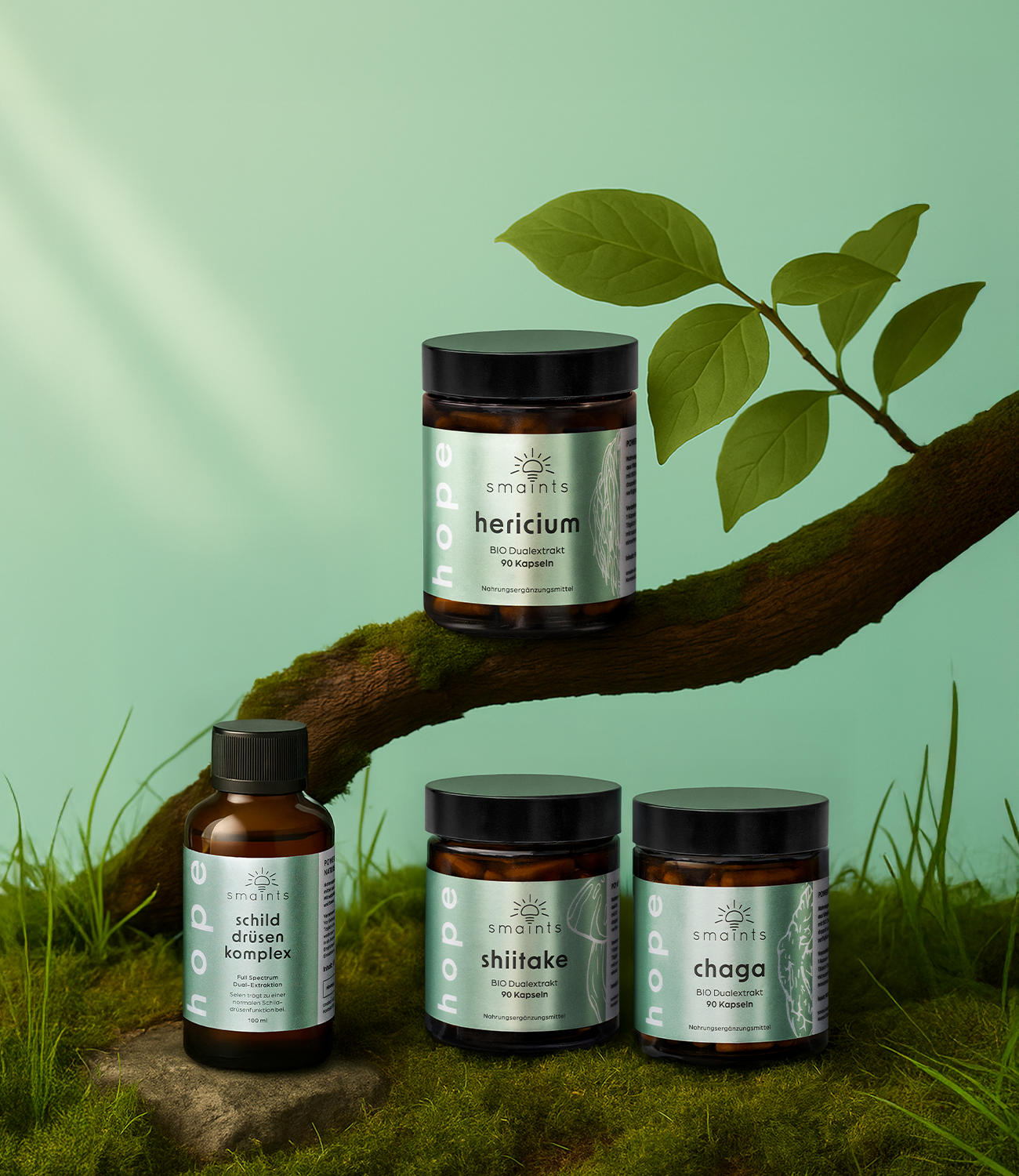
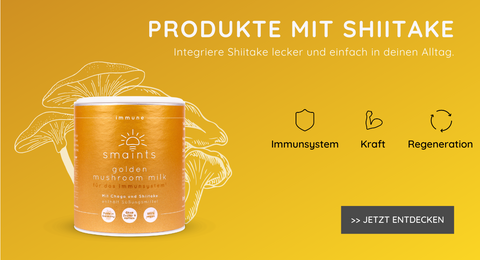
Our tip: Smaints' Golden Mushroom Milk . It contains delicious spices like cinnamon and ginger with shiitake extract, chaga extract, black pepper, and turmeric in an ideal combination for your immune system. You can easily stir the powder into warm (plant-based) milk or, for example, prepare "Golden Immune Balls." Here's the recipe --> Energy Balls made with Golden Milk and Shiitake Mushrooms

The question "What is shiitake?" can be answered as follows: A shiitake mushroom is both an edible and a medicinal mushroom. It has long been known, especially in Asia. But its effects are also becoming increasingly popular in other parts of the world. In addition to vitamins and minerals, the mushroom contains beneficial amino acids, phytochemicals, and polysaccharides, which explain some of the effects of shiitake.
In traditional Chinese medicine, the shiitake mushroom is used in various applications: It is believed to generally strengthen the immune system. Traditional practitioners rely on shiitake's effects to treat infections caused by viruses, fungi, bacteria, and parasites. It is also used to promote resistance to cancer and to lower cholesterol levels. Some of these effects of shiitake have been supported by initial scientific studies. In the area of immunomodulation, that is, the mushroom's influence on the immune system, initial molecular pathways have even been analyzed.
Nevertheless, further studies are needed in all areas of research on this medicinal mushroom before it can be used as a medicine. Today, you can consume shiitake as an edible mushroom or as a dietary supplement in capsule, powder, or extract form. Occasionally, consuming shiitake can lead to side effects. A skin rash, also known as shiitake dermatitis, and, rarely, respiratory problems are possible.
Take advantage of the Shiitake effect: You can find Shiitake extract, for example, in our delicious Golden Mushroom Milk.
Want to learn more about medicinal mushrooms? Then we have some reading tips for you:
Sources:
https://www.bfr.bund.de/cm/343/gesundheitliches_risiko_von_shiitake_pilzen.pdf
https://www.krebsinformationsdienst.de/aktuelles/2016/news78-shiitake-pilze.php
https://pubmed.ncbi.nlm.nih.gov/31930148/
https://pubmed.ncbi.nlm.nih.gov/25866155/
https://pubmed.ncbi.nlm.nih.gov/21941428/
https://pubmed.ncbi.nlm.nih.gov/10503166/
https://pubmed.ncbi.nlm.nih.gov/21682139/
https://pubmed.ncbi.nlm.nih.gov/20491636/
https://pubmed.ncbi.nlm.nih.gov/30806258/
https://pubmed.ncbi.nlm.nih.gov/11520942/
https://pubmed.ncbi.nlm.nih.gov/34375514/
https://pubmed.ncbi.nlm.nih.gov/31030752/
https://pubmed.ncbi.nlm.nih.gov/33044599/


Bio-Vitalpilz-Extrakte
aus Europa

Wissenschaftlich entwickelt - Tradition trifft Moderne

Alltagstauglich & lecker

Unabhängig laborgeprüft
in Deutschland